5 Tips to Overcome Social Anxiety Without Alcohol — NuLifeLineCare

Social anxiety is one of the most widespread mental health struggles in India, impacting more than 35 million adults each year. To cope, many people reach for alcohol, using it as a way to ease nerves and feel more relaxed in social situations. While it may seem like a quick solution, this habit can easily spiral into something harmful, raising the risk of alcohol dependence over time.
At NuLifeLineCare Rehab Centre, we guide individuals toward healthier ways of managing social anxiety and methods that don’t rely on alcohol. Our approach focuses on building confidence, creating meaningful connections, and developing long-lasting emotional resilience. Instead of masking discomfort, we help people discover tools and strategies that truly support their mental well-being and personal growth.
Understanding Social Anxiety
Social anxiety, often referred to as social phobia, is not simply about being reserved or quiet. It is a serious mental health condition marked by an overwhelming fear of being negatively evaluated, criticised, or humiliated in social or performance settings.

Individuals experiencing this often find themselves withdrawing from gatherings, avoiding conversations, or struggling with everyday situations like ordering food in public, all because of the intense discomfort it brings.
Typical signs of social anxiety may include:
- Difficulty maintaining eye contact with others
- Feeling nauseous, sweaty, or restless before social encounters
- Rapid heartbeat, shaking, or tense muscles
- Strong fear of speaking in front of others or interacting with strangers
- Excessive worrying days or even weeks before an upcoming event
Why Social Anxiety Leads to Alcohol Drinking
Social anxiety isn’t just shyness; it’s a real mental health condition marked by overwhelming fear of judgment, embarrassment, or rejection.
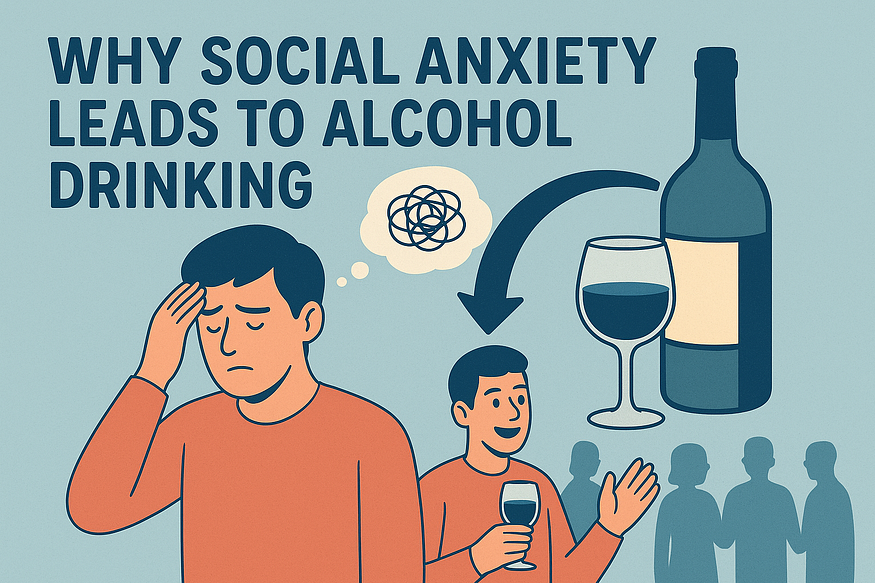
- Alcohol masks anxiety but never solves the root cause.
- Dependence grows as the brain links social comfort with drinking.
- Hangovers and withdrawal intensify anxiety symptoms.
This is why finding ways to reduce social anxiety without alcohol is critical for long-term mental and emotional well-being.
5 Practical Tips To Overcome Social Anxiety Without Alcohol
Alcohol might feel like a shortcut to ease anxiety, but it deepens the problem in the long run. With the right strategies, it’s absolutely possible to overcome social anxiety without alcohol.

1. Practice Mindful Breathing and Relaxation
Anxiety often begins with racing thoughts and a fast heartbeat. Deep, mindful breathing can immediately calm the body’s stress response. Try the 4–7–8 technique:
- Inhale for 4 seconds
- Hold your breath for 7 seconds
- Exhale slowly for 8 seconds
Doing this before and during social situations helps you stay calm — no alcohol required.
2. Start Small With Social Interactions
You don’t need to jump straight into crowded parties. Begin with smaller, manageable settings like:
- Talking to a trusted friend
- Joining a small hobby group
- Practising casual conversations with colleagues
Gradual exposure builds confidence and teaches your brain that social interactions are safe, not threatening.
3. Challenge Negative Thoughts
Social anxiety thrives on false beliefs such as:
- “Everyone is judging me.”
- “I will embarrass myself.”
- “People won’t like me if I don’t drink.”
Write these thoughts down and question them. Most often, you’ll realize they aren’t true. Reframing your mindset helps you face situations without alcohol.
4. Adopt Healthy Lifestyle Habits
Unlike alcohol, which weakens the body, healthy habits make you stronger against anxiety:
- Exercise: Releases endorphins that naturally calm nerves.
- Balanced nutrition: Fuels your brain and improves focus.
- Adequate sleep: Restores energy and stabilises emotions.
These simple changes create a long-term foundation for confidence.
5. Seek Professional Help and Support
Sometimes, overcoming social anxiety without alcohol requires expert guidance. Professional help can provide:
- Therapy to identify triggers
- Counselling to develop coping strategies
- Holistic wellness practices for mind and body
Why Select NuLifeLineCare For Lasting Recovery?
At NuLifeLineCare rehab and de-addiction centre, we know social anxiety and alcohol don’t go hand in hand.

Our approach is holistic and supportive:
- Personalised recovery plans designed for individual needs
- Expert therapists and counsellors with years of experience
- Safe, healing environment to regain confidence without alcohol
- Holistic care that focuses on both addiction recovery and mental health
If you’re ready to break free from alcohol and anxiety for a lasting recovery, NuLifeLineCare Rehab is here to guide you.
Connect with our treatment expert and start your journey to a confident, alcohol-free life.
📞 Contact Us: +91 8958305058 | +91 9760378437 | +91 7217212828


Comments
Post a Comment